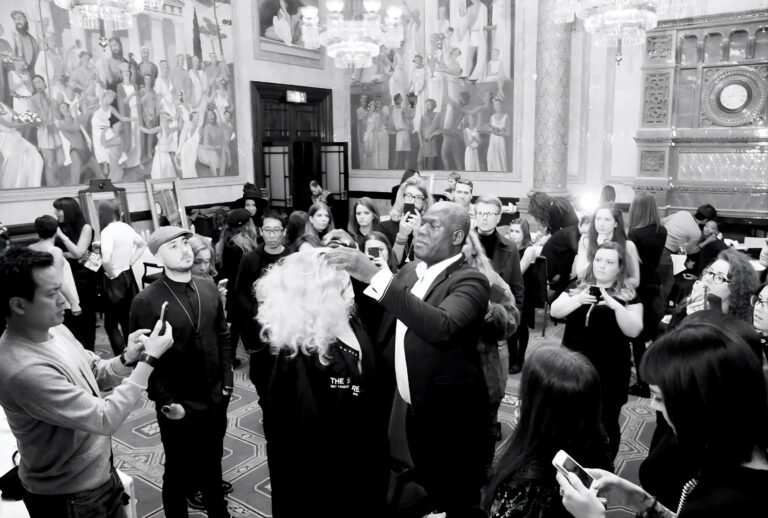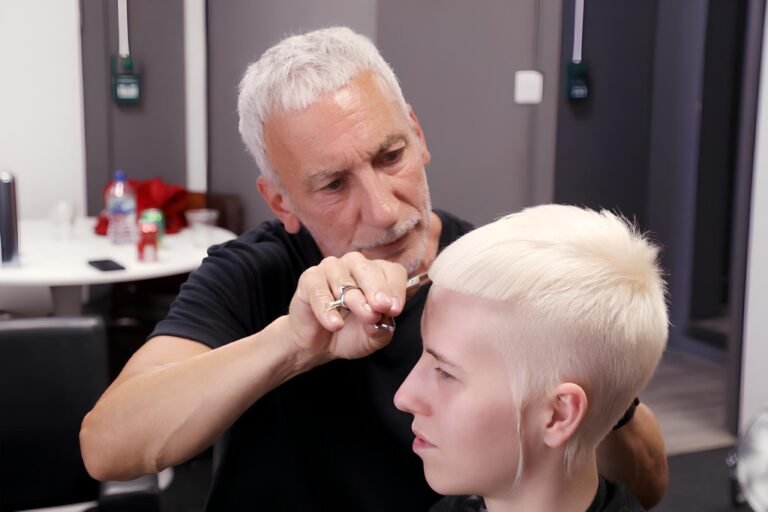



Errol Douglas MBE: The Hairdresser Who Refused to Choose
He took his first salon job at eleven. More than four decades later, Errol Douglas MBE is still making the same argument: a professional should be able to care for any head of hair that walks through the door. The profession’s own rulebooks are still catching up.
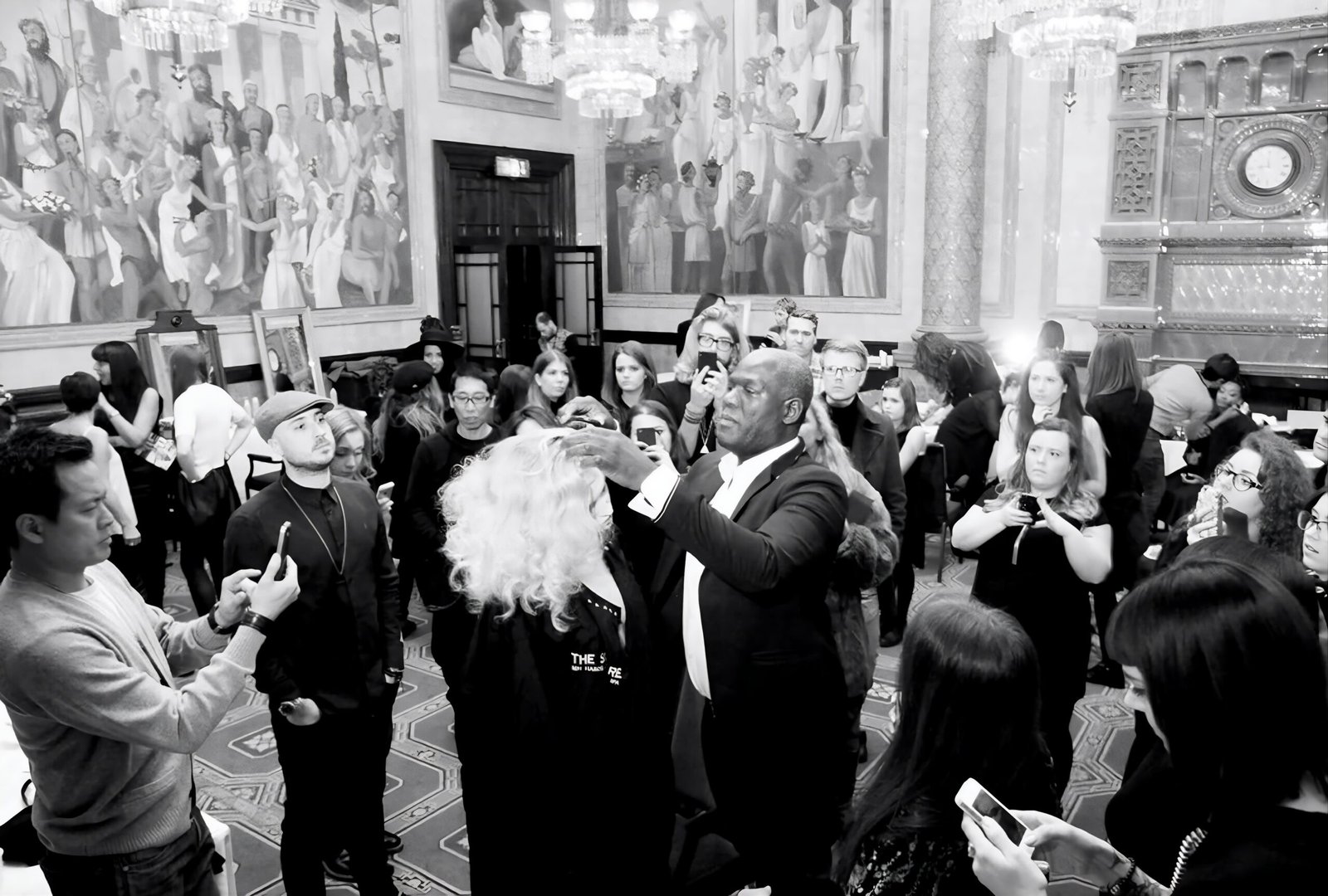
The first salon Errol Douglas worked in taught him what not to do. He was eleven, and the owner was his mother’s hairdresser. By his account, she kept clients waiting and gave them no real service. “She was the opposite of what I wanted to be,” he later said of her.
It is an unlikely origin story for a man who now runs a salon on Motcomb Street and an atelier inside The Peninsula London, and who holds an MBE. Yet it explains a great deal. For more than four decades, Errol Douglas has built his career on one idea: whoever sits in the chair, whatever their hair, deserves the full skill of a professional.
That idea has made him one of British hairdressing’s most decorated figures. It has also made him one of its most persistent voices. Now, as textured-hair training moves into New York’s licensing rules while stalling in British qualifications, his long-held arguments feel newly relevant on both sides of the Atlantic.
An East End Boy With a Stack of Magazines
Errol Douglas was born in Hackney, East London, into a family with Guyanese heritage. He was the youngest of five brothers in a household he describes as hardworking, with parents who encouraged him from the start. His brothers, he says, took the academic route. He went another way.
The pull came from his father. Douglas remembers him as a deeply visual man who brought home magazines and books and loved the arts. His youngest son soaked it all up, and was the only child in the house playing with magazines and dolls.
Outside the front door, the neighborhood was less forgiving. He has recalled that “if you even mentioned the word ‘hair’ or ‘fashion’ you’d get beaten up” in the East End of his childhood.
Still, he knew early. As a boy he told his parents he would own a salon one day, a declaration they found amusing. The retellings of his first steps differ in the details: ten, eleven or twelve years old; a local salon or, in one account, a West End salon where an older brother chaperoned him on weekends. The through line never changes. He was working in salons before he was a teenager, and he never left.
One of those early workplaces, he has said, did only Afro hair. He found it too segregated. “My philosophy then and is now all inclusive,” he said in 2023, looking back. It is the earliest version of the principle that would come to define his business.
Learning From the Best in the Room
His first job as an assistant was at Roger Heart’s salon in London. There he met Paul Edmonds, and when Edmonds left to open his own salon, Douglas went with him. He still names Edmonds as his mentor.
At Edmonds’s salon, he said in 2009, he was suddenly surrounded by the industry’s most creative people. Among them was Sam McKnight, whom he assisted. McKnight’s advice stayed with him: to succeed in fashion, you have to be able to work with every kind of hair and never fear the unknown. McKnight, for his part, has said he has known Douglas for more than 25 years and regards him as a mainstay of British hairdressing.
The order and length of the roles that followed vary between tellings, but the names hold steady. Douglas worked at Neville Daniel in Mayfair and served as artistic director for Paul Edmonds. He then spent four years as artistic director at Richard Ward. Along the way, he spent roughly nine months working in the United States and Canada. For a while, he said, he thought he might stay, before choosing London.
Those years also built his fashion and media career. He has described London Fashion Week as his first real creative project and his entry into the fashion world. His published credits run from the BBC’s Style Challenge and the Clothes Show to makeover formats such as 10 Years Younger. Meanwhile, his session work appeared in titles including Vogue, Tatler and Harpers & Queen. Over the years, his reported client list has included Naomi Campbell, Diana Ross and Brad Pitt.
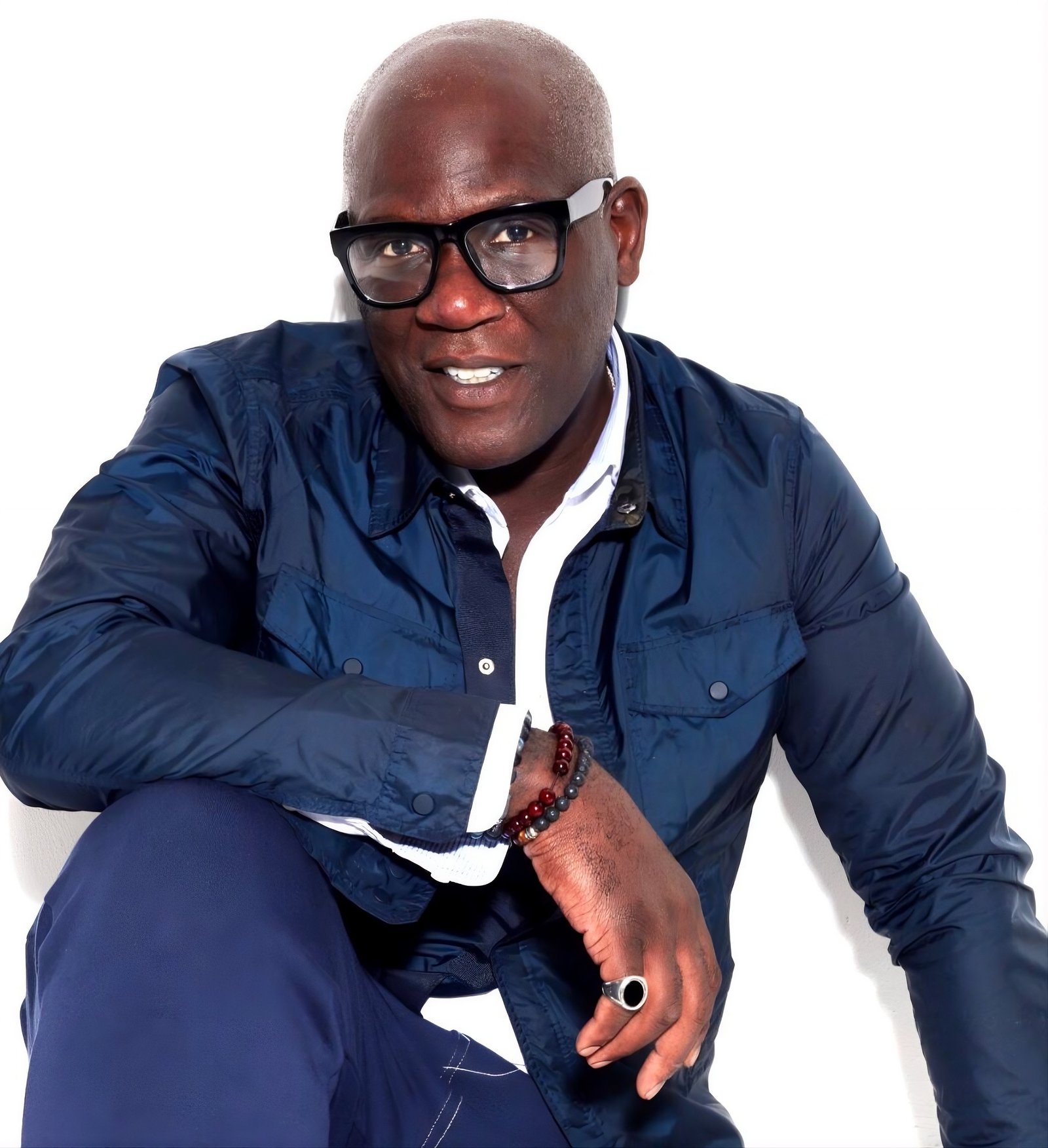
Motcomb Street, 1998
At about sixteen, Douglas has said, he rode a bus into central London and decided where his salon would be: Knightsbridge. He knew what that ambition meant. “Not many people who look like me have businesses in Knightsbridge,” he said in 2024.
He opened on Motcomb Street, in Belgravia, in August 1998, with business partner Kim Clayton. People told him it couldn’t be done. He calls it the scariest and proudest moment of his career. From day one, his stated aim was an all-inclusive salon, built around the company line “technical excellence.”
In practice, that means a team trained across European, Afro, Middle Eastern and Asian hair. Douglas says more than fifteen languages are spoken on the salon floor. The mix has produced its own cross-pollination. In the mid-2010s, he described techniques traveling from Afro hairdressing to European clients, including plaited-in extensions and sewn-in fringes. He also spoke about the confidence needed to put movement into very strong, straight hair.
He has resisted the obvious next step. Explaining at the time why he hadn’t built a chain, he argued that service suffers when salons spread themselves too thin. He said he would rather add a floor than add a location. Plans for a younger, more affordable sister salon have surfaced more than once since; none has been announced as open.
The business did grow in autumn 2023, on its own terms. It opened an atelier salon inside The Peninsula London, whose spa names the Errol Douglas salon as its exclusive hair partner. In 2025, Douglas said a third, international location was under negotiation. He now describes his role as co-founder of Errol Douglas London.
The Record He Keeps Breaking
Errol Douglas’s awards history is long, and parts of it are often misreported. The British Hairdressing Awards’ own records list his Afro Hairdresser of the Year wins as 1993, 1995 and 2007. The third win placed him in the awards’ Hall of Fame. He joined the F.A.M.E. Team, the Fellowship for British Hairdressing’s program for rising talent, in 1994. In 2021, he was named International Hairdresser of the Year at the International Hairdressing Awards. The Fellowship has also named him its Hairdresser of the Year twice.
Then there is the award he has never won. According to the Fellowship, Errol Douglas has been nominated for British Hairdresser of the Year more times than anyone else. By 2014, he had already broken the record. In 2009, he called the title the ultimate accolade and said he would still love to win it. He is on the 2026 shortlist once more, alongside nominees including Efi Davies and Bruno Marc Giamattei, and the winner will be announced in London on November 23.
The honor he values most came from outside the trade. In the 2008 New Year Honours, he was made an MBE for services to hairdressing. He says he never knew who nominated him. When the letter arrived bearing the royal emblem, he assumed he was in trouble with the tax authorities. He believes the honor reflected his commitment to education, charity work and shows abroad. His reading of it has not changed. “It’s not an award for Errol Douglas, it’s an award for the industry,” he said at the time.
His institutional role followed. Errol Douglas served as president of the Fellowship for British Hairdressing from 2013 to 2015. The organization says he used the post to champion young talent and raise the international profile of UK hairdressing. In December 2017, he became a Patron of Honour alongside Trevor Sorbie MBE and Ann Herman, and he remains a Fellowship ambassador.
What Errol Douglas Believes
Read his public statements in sequence, from a 2009 career profile to a 2025 Q&A, and four convictions keep returning. None of them is unique to him. What stands out is how consistently he has held them, and how closely each tracks a pressure the industry faces today. The grouping below is The Hair Magazine’s reading of his record, not a framework he has laid out himself.
Every head of hair
Since opening his salon, Douglas has argued that segregating hairdressing by hair type is a failure of the profession. In 2020, during the reckoning that followed the Black Lives Matter protests, he said hairdressers must learn the fundamentals of Afro hair. No one, he argued, can simply say they don’t do texture. His conclusion was blunt: “hairdressing should be like that, it shouldn’t be segregated.”
His objection was never to Afro specialism; he won that category three times. It was to a profession that sorts clients by texture before they sit down. He has hosted a trade-magazine interview series on inclusivity, and textured-hair educator Sandra Webb credits him, among others, with encouraging her to move to London and build her career.
The policy picture explains why the argument still matters. In 2021, Britain’s National Occupational Standards for hairdressing were updated to include all hair types, including wavy, curly and coily hair. However, in November 2025, the British Beauty Council’s Hair Equity Taskforce told the government those changes still hadn’t been properly implemented in funded qualifications.
The United States is moving faster in places. New York signed a law in November 2023 requiring cosmetology licensing to cover all hair types and textures. The state’s new training requirements for cosmetology programs arrive in September 2026.
No shortcuts
The second conviction is about time. In 2009, asked what he would change about the industry, Errol Douglas said he would lengthen the apprenticeship. “I would make it essential to train for at least four to five years,” he said, adding that some people take the easy way out and never learn every part of the craft.
His own salon’s program reflects that view. Apprentices must complete every module, he says, from cutting, color and styling to men’s hair, hair-ups and Afro hair. He describes the salon’s training in Afro and textured hair as extensive, and says it is missing from many other programs. His ambition for them is simple: “We produce stars of the future.”
Technique alone doesn’t make the cut. Douglas has said the best hairdressers have a natural eye, can communicate, have personality and lead naturally. When he interviews trainees, he wants to know about their hobbies and how they are around other people.
A profession, not a pastime
The third conviction is about standards. Douglas believes hairdressers should be licensed, and he wants the industry’s many trade bodies replaced by a single governing one. In Britain, that is still an open fight. The Hairdressers (Registration) Act 1964 created a state register, but joining it is voluntary. The Hairdressing Council estimates that only about 10 percent of hairdressers have registered.
American readers will notice the irony. Errol Douglas is asking Britain for something every U.S. stylist already lives with: a license to practice.
His sharpest words are reserved for untrained competition. In 2023, he said too many freelancers were working from home, and that a professional salon matters especially for extensions and chemical services. By 2025, his tone had hardened: “Everybody claims they’re a self-taught hairdresser online which has now become my battlefield.”
Social media sits awkwardly in this picture. Douglas has complained that hairdressers online give away the tricks of the trade. Yet in the mid-2010s, he said he was not precious about sharing his secrets with the next generation. He also urges stylists to market themselves visually online. Our reading: his line falls between teaching professionals and handing the craft to consumers for free.
Keep the doors open
The fourth conviction is the least glamorous and perhaps the most honest. Awards and stages are wonderful, Douglas said in 2024, but “owning a successful business and keeping your doors open is the biggest challenge.”
The property lesson runs through his career. In 2009, he wished he had bought a commercial freehold to live above and trade from. In 2025, he described the harshest climate he had seen: interest rates, rent, cost of living, utility bills and clients visiting less often. His advice to newcomers was to open small, look for low rent and consider buying the freehold.
The wider data backs his concern. According to the National Hair & Beauty Federation (NHBF), 58 percent of people in the UK hair and beauty sector were self-employed as of 2024.
One caveat belongs here. Douglas is not a neutral observer. He owns salons, and his case for the salon over the kitchen chair also serves his business. Some of his public commentary has come alongside brand partnerships, from Moroccanoil and Dyson to Living Proof and Glowwa. None of that makes him wrong. But his arguments are strongest where they rest on training and standards, not on footfall.
Fashion, Technology and the Client in the Chair
Errol Douglas treats fashion as a laboratory, not a template. In the mid-2010s, he said his team worked with fashion brands and took part in London and New York fashion weeks. It then adapted runway ideas into softer, wearable versions for its salon look books. He is clear about the difference between the two worlds. “You have to know when to be creative, and when to be commercial,” he has said. His award images, he explains, are made to inspire the industry, not to sell a look to his clients.
His references are wide. He has named the 1960s of Mary Quant and Vidal Sassoon as his favorite hair era, for its clean lines and symmetry. He has also cited carvings at New York’s Metropolitan Museum of Art, and he likes to start a collection from a single reference and let it multiply.
On technology, he is pragmatic rather than evangelical. In 2022, he said the salon had installed a smart mirror with a 3D element. He sees it as a consultation tool, especially for younger clients and people who can’t make it to the salon. He was equally clear about who stays in charge: “We are the professionals we can set the programs.” A new haircut, he added, is very hard to invent, but color technology is always relevant.
Clients themselves have changed, and his reading of them has shifted quickly. In 2024, he described more men and women coming into salons than ever before, all more conscious of how they look. The salon added a wellness-led “Hair Ceremony” service built around breathwork, massage and sound. Within a year, he was describing a far tougher market. Through both, the constant is consultation. Understanding what someone wants and translating it, he says, is the hardest skill in every part of his job.
The Next Generation
If Errol Douglas has a single cause, it is the people coming up behind him. In 2023, he observed that fewer school leavers were entering the profession. More recruits were older and came from other backgrounds, and many no longer wanted long hours. The numbers support him. The NHBF reported that apprentice starts in England fell to 7,000 in 2019–20, down 4,500 from 2017–18.
His response has taken several forms. As Fellowship president, he made young talent his stated priority. He has since worked as creative director on shoots with the F.A.M.E. Team, and one member called the experience the highlight of their journey so far. He also launched the Errol Douglas Club, a digital mentoring platform. Its pitch rests on his own creed: “I believe you must be better than you ever thought you could be.”
The clearest evidence is on his own salon floor. About a decade ago, Douglas said none of his children planned to join the trade. His daughter, Yolanda Douglas, has since become one of the salon’s top stylists and colorists, and he calls her the team member he is proudest of. In her own words, she always had an urge to create with her hands, from drawing and painting to hair.
In 2026, Mustafa Alan of Errol Douglas Salon London became a finalist for London Hairdresser of the Year at the British Hairdressing Awards. It is a concrete measure of a training model that asks a lot and promises a career in return.

What the Industry Can Take From Him
The case Errol Douglas has made for decades is not complicated, which may be why it is so often ignored. Train people properly and for long enough. Teach them every texture. Protect the title of hairdresser, and run the salon like a business that intends to survive.
What his career adds is proof that the ideas hold together. The Motcomb Street salon has been open since 1998. Its training has produced a 2026 award finalist, and his daughter works on its floor. Meanwhile, the arguments he has made for years are now being settled in New York’s rulebook and fought over in letters to British ministers. That is The Hair Magazine’s view of his record, and it is a record still being written.
On November 23, the British Hairdressing Awards will name their British Hairdresser of the Year, with Douglas among the nominees once again. Whatever the result, the lesson he credits to his mentor, Paul Edmonds, still describes the way he works: “Never cut corners and always plan ahead.”