


Not Just a Trim: Akin Konizi on Creativity in a Commercial Salon
He has won British Hairdresser of the Year four times and is nominated again for 2026. But Akin Konizi’s argument isn’t about the stage – it’s about the chair by the window, and the client who quietly takes her next haircut somewhere else.
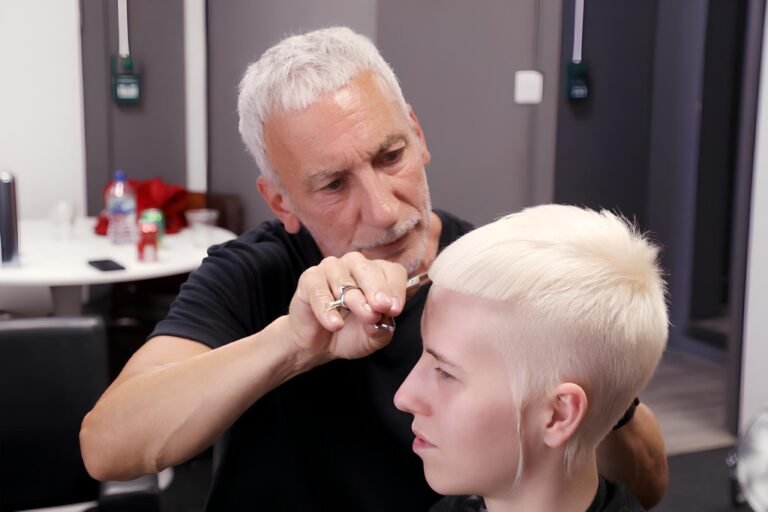
The haircut in front of Akin Konizi is close to a perfect sphere. Platinum, blunt, cut to sit just above the nape, with one long disconnected panel left loose at the side. He combs, checks the weight line from behind, then trusts the mirror. The shape reads as a statement. It is also wearable enough to walk out into an ordinary street. That double requirement is the whole of his case for creativity in a commercial salon.
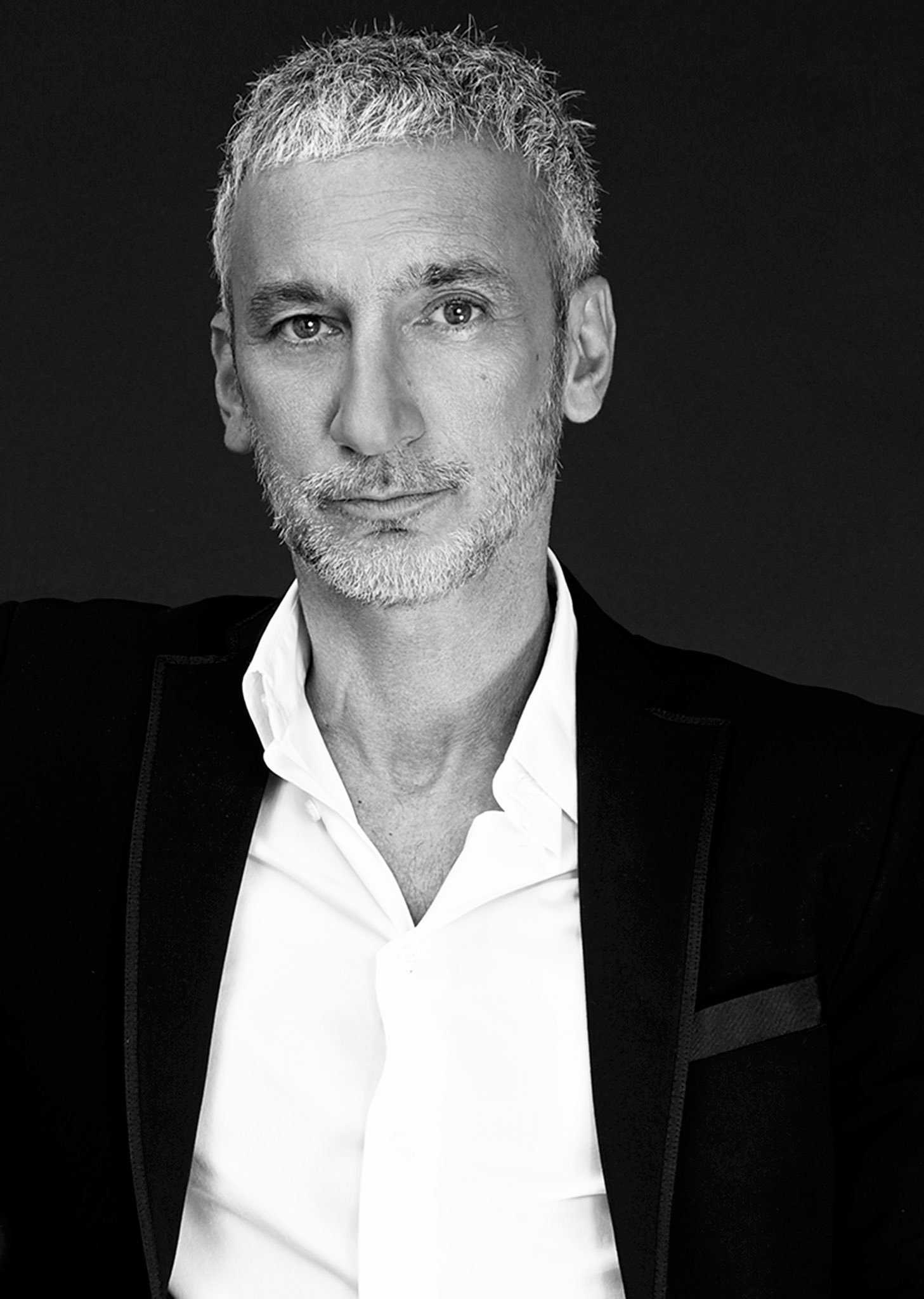
Konizi is international creative director of HOB Salons and HOB Academy. He has won HJ’s British Hairdresser of the Year four times, and he is nominated again for the 2026 title. He has also built that career inside a commercial group rather than outside one. So when he talks about creative work, he is not describing a shoot, a stage, or an awards collection. He means a Tuesday afternoon column.
What creativity looks like in a commercial salon
His definition is deliberately unromantic. It begins with recognition: finding, as he puts it, “the village fashionista; the cool girl who wants something different.” Or the longstanding client who would suit a pixie and has never once been offered one. Persuasion comes next, then execution. Konizi describes the job as “driving fashion within your clientele” rather than waiting for requests to arrive at the front desk.
That framing matters. Most stylists hear the word creative and picture something they cannot sell. His version is smaller and more useful. A fringe cut at a different angle counts. So does a length you would not normally attempt, or a familiar bob approached a different way.
Change is a retention strategy
From there, the logic turns commercial. Clients replace their jeans and their sneakers every couple of seasons, he points out. Hair that stays identical across years of appointments starts to look like inattention rather than loyalty. Whether a client books every six weeks or every fifteen, the responsibility is the same. Konizi sees it as the stylist’s job to guide her into her next look.
The risk of skipping that conversation is specific, and it rarely announces itself. A client who is never offered change does not usually complain. She simply books the change somewhere else. Even a woman with no intention of going short, he argues, wants to know her stylist could take her there. Otherwise, in his words, “she may just go somewhere else for that change.” Seen that way, creativity in a commercial salon is a defensive business move as much as an artistic one.
Craftsmen, not artists
Konizi is careful about the word artist. Hairdressers are craftsmen, he says, and craft without any appetite for creativity collapses into repetition. At that point, “you might as well become a factory worker.” It is a blunt line with a practical claim underneath. Creativity, in his account, is what drives a stylist to sharpen technique, follow fashion properly, and read a client accurately.
He has been making versions of this argument for years. In an open letter published by Hairdressers Journal, he warned that consistency and service have come to outrank creativity in many salons. Without creative people, he argued, nothing pushes the craft forward. His worry now is that creativity has quietly taken a back seat to long hair and safe commercial work. It is not just a trim, as he puts it.
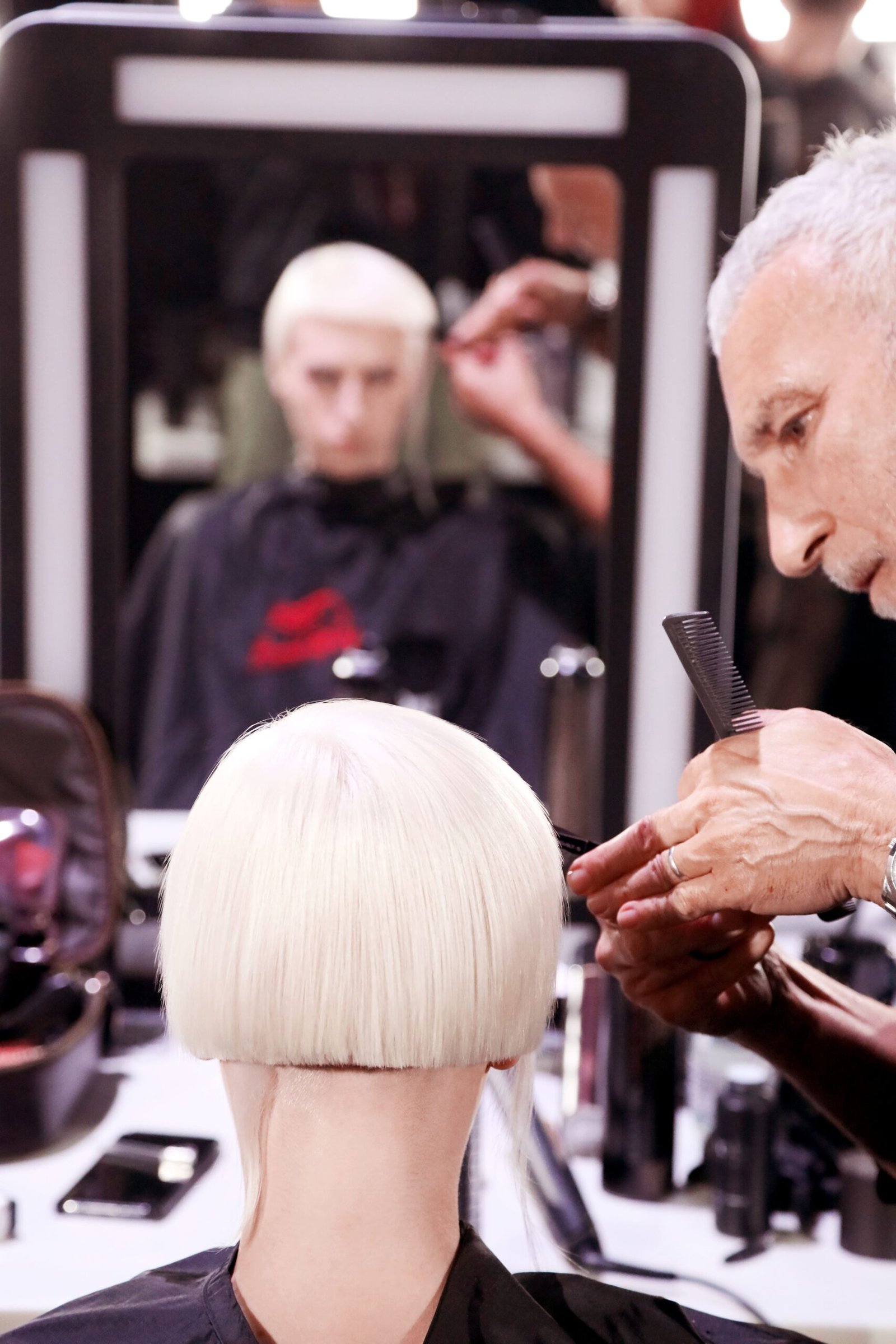
Five ways to build creativity into a commercial week
Building creativity into a commercial salon does not require a studio, a budget, or a fashion week booking. Most of Konizi’s suggestions cost nothing and run from the salon floor.
- Put a card in the window asking for creative models. An in-salon event gives the team a reason to work differently for an evening.
- Offer the cut and color free to build a pool of experimental clients. They talk, and they widen what a stylist is willing to attempt.
- Stop assuming the adventurous client lives somewhere else. Fashion-literate people exist in every town, whether or not they have walked through your door yet.
- Study the cutters and colorists you admire. Rebuild their work, understand why it holds, then develop your own version.
- Give the salon a standing creative element, so the whole team is thinking about the work rather than only the column.
Forty years of holding both
The approach did not arrive with the awards. Konizi has told Hairdressers Journal that he enrolled at the London College of Fashion in 1979, before a visit to his cousin’s East End salon redirected him. He trained as an apprentice at Alan International in Leicester Square, under John Rawson. In 1983 he joined Clive Collins and Paul Simbler to found Hair on Broadway, the group now known as HOB. The stated aim was “high standards of creativity as well as commercial work.”
Recognition came slowly after that. Eastern Hairdresser of the Year arrived in 2001 and London Hairdresser of the Year in 2005. The first British Hairdresser of the Year title followed in 2008, the fourth in 2013. HOB now runs salons across London and the Home Counties, and the HOB Academy teaches hairdressers at every level, from visiting professionals to the group’s own apprentices. The HOB Creative Team took Artistic Team of the Year at the most recent British Hairdressing Awards.
The 2026 nomination sets a familiar test. Nominees submit eight images made within the previous twelve months, judged by a panel of industry figures and media. Results are announced on November 23 at JW Marriott Grosvenor House in London. Those eight pictures will be made in the same rooms where clients sit. Before any judge sees them, the argument behind them gets tested every day, in a chair by the window, on someone who came in for a trim.