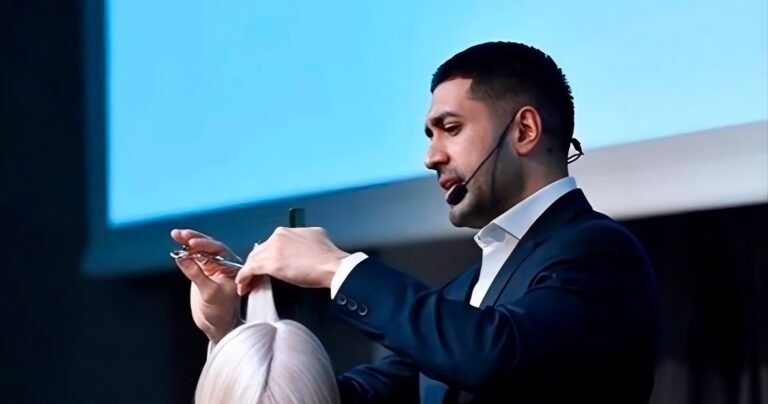
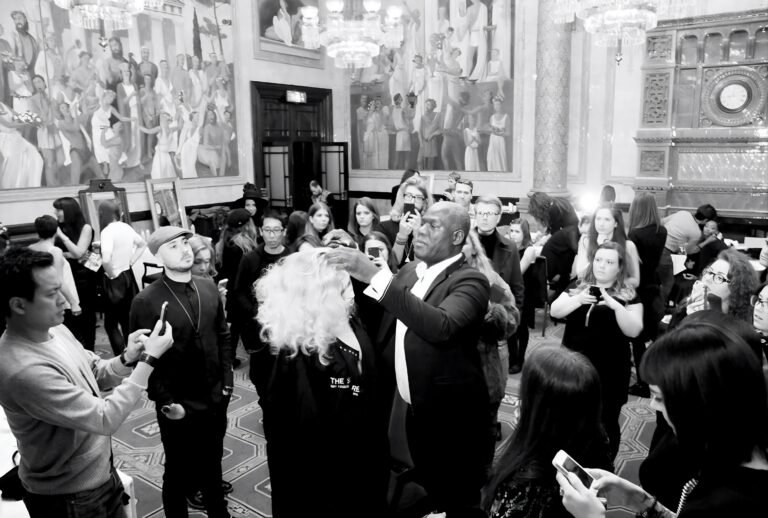
Jay Mahmood: The Discipline Behind the Line
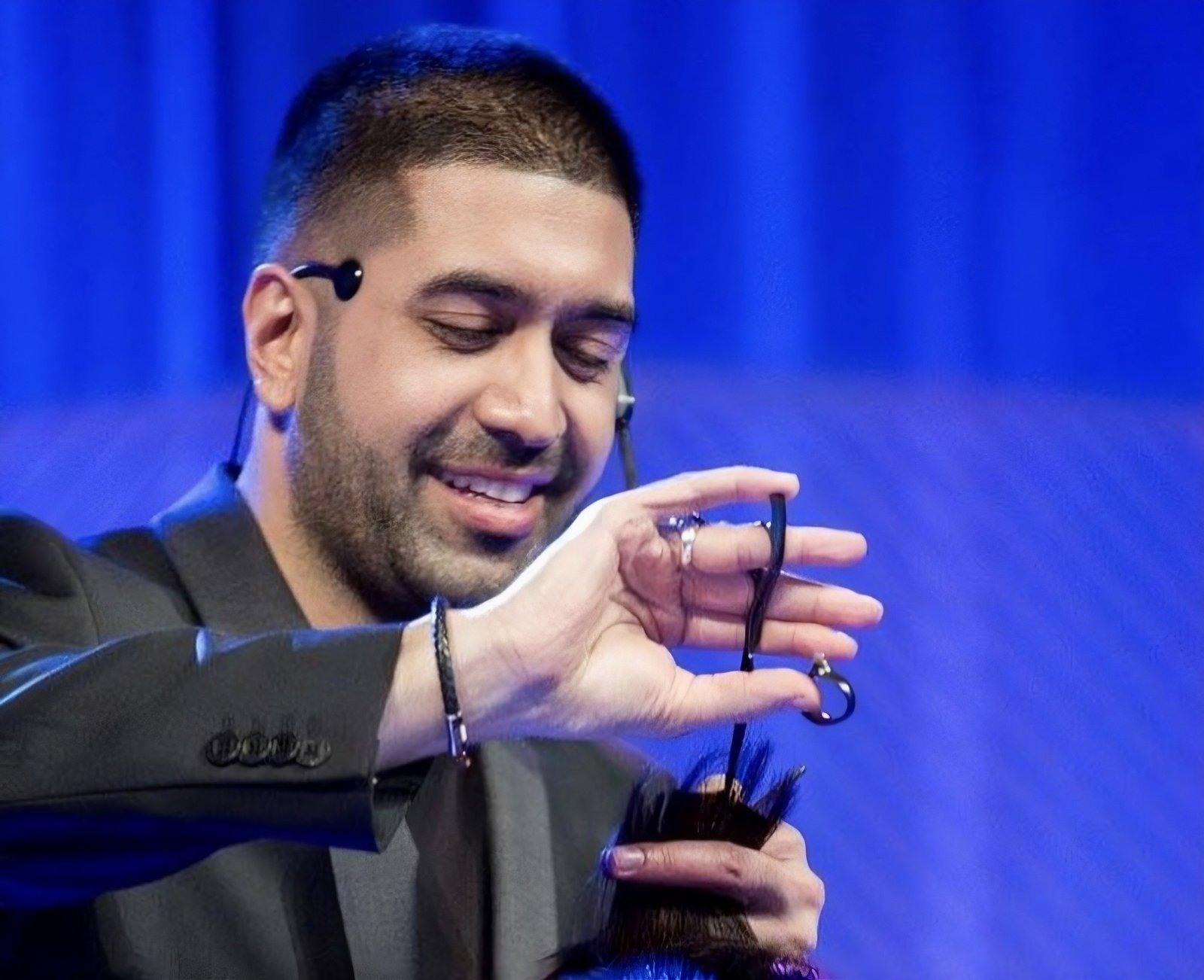
Early in his training, Jay Mahmood could not cut a clean line through his comb. He has admitted as much to the stylists who follow his work online. The fix he eventually found was almost absurdly small: he changed the way he held his scissors.
It is a revealing detail from a man whose name now stands for precision cutting in classrooms on several continents. For more than two decades, Jay Mahmood has worked from a simple premise. Technical excellence rarely arrives fully formed. Instead, it is assembled one adjustment at a time, and then it is taught.
From a Sassoon Apprenticeship to the Academy
Mahmood grew up in East London and walked into Vidal Sassoon in 2000, at the age of 16. The British press had christened “the Sassoon bob” back in 1963, and the name still meant short, geometric, wash-and-go cutting. For a teenage apprentice, that meant an education built on shape, structure and exactness.
He completed a three-year apprenticeship, qualified as a stylist and worked behind the chair. Around the age of 20, he moved onto the Sassoon Academy education team. By 23, he was running one of the company’s academies in central London. That made him one of the youngest academy leaders in its history. In total, he stayed with Sassoon for nearly 11 years.
That timeline matters. Mahmood learned to teach almost as soon as he learned to cut. Much of what defines his work today reads like the habits of someone who discovered that early. He insists on explanation, and he is patient with fundamentals, because doing something well and passing it on are two different skills.
Not everyone expected him to get there. He has recalled being told that he would never be good enough and would never make it. Rather than bury the memory, he uses it. Today he tells young stylists that hard work can take them where those voices said they could not go.
Building Systems, Not Just Haircuts
In January 2011, Mahmood became principal of Allilon Education, the Covent Garden academy founded by Johnny Othona and Pedro Inchenko. There he led the education team and hosted stylists from around the world. After four years, he spent a short period working independently, running seminars internationally under his own name.
Then, in May 2015, Goldwell named Jay Mahmood its Global Artistic Ambassador for Haircutting. The brand created the position for him. Long associated with color, Goldwell wanted to be taken just as seriously for its cutting. He later led the brand’s haircutting and education work as creative director.
The job was never simply to cut beautiful hair on stage. Instead, Mahmood built Goldwell’s global haircutting education system. In 2016, the brand launched his Master Stylist program in the US. It was a four-level journey through Essential Shapes, Contemporary Shapes, Advanced Shapes and Collection Shapes, designed to sit alongside Goldwell’s color curriculum.
His reasoning was direct. Many stylists, he observed at the launch, cut hair for years without fully understanding what they are doing. Others settle into repeating the same handful of haircuts. A system gives both groups a way forward. Mahmood then trained teams of educators worldwide to teach his methods in their own countries. That is a different discipline altogether from teaching a room yourself.
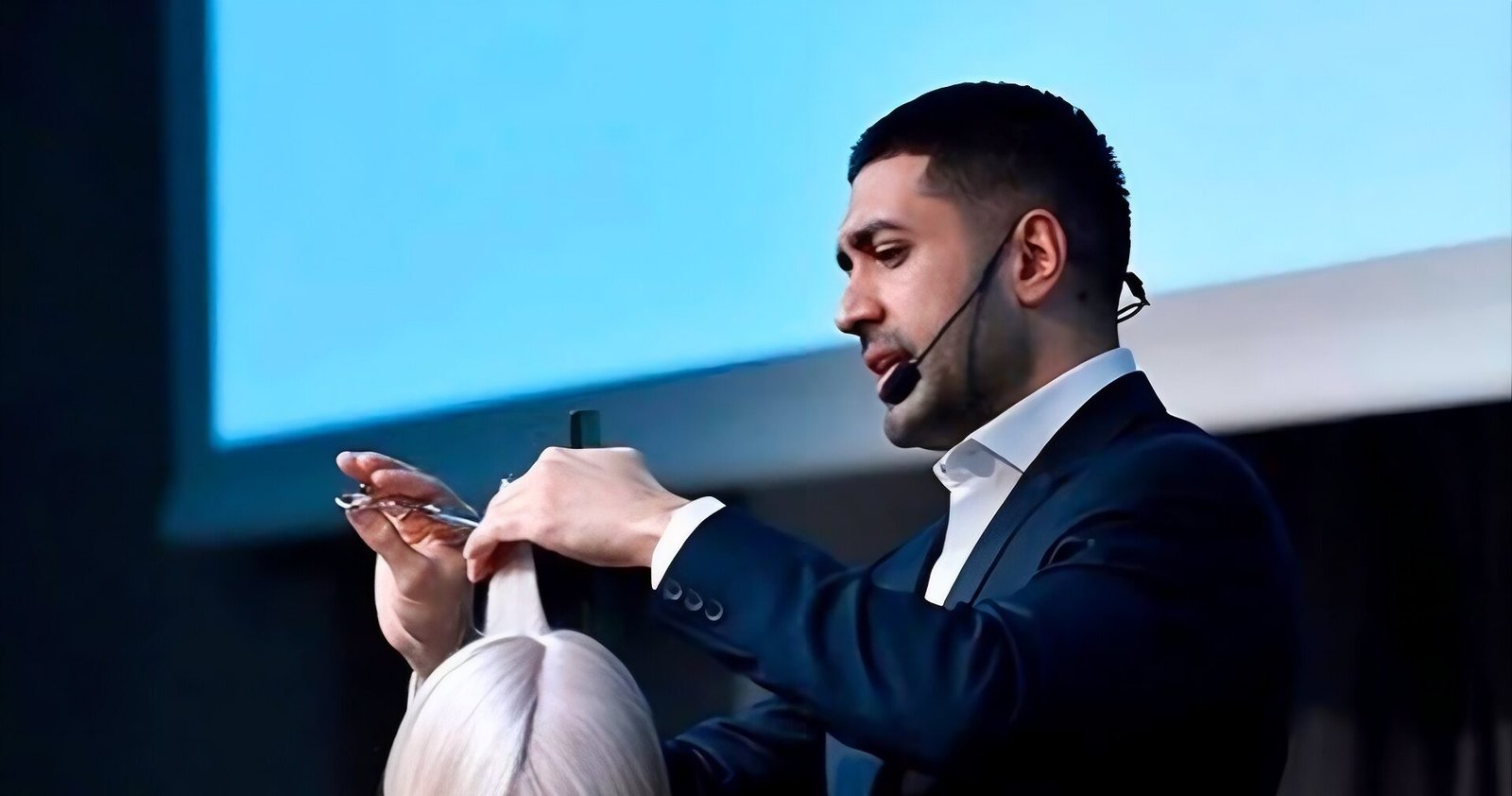
Meanwhile, the stages kept getting bigger. In 2016 he presented at Goldwell’s global event at the Ericsson Globe in Stockholm. Later, he demonstrated a favorite fringe technique at the same global gathering. His seminars have taken him to New York, London, Tokyo and Dubai, and to more than 20 countries in all.
Discipline First, Creativity Second
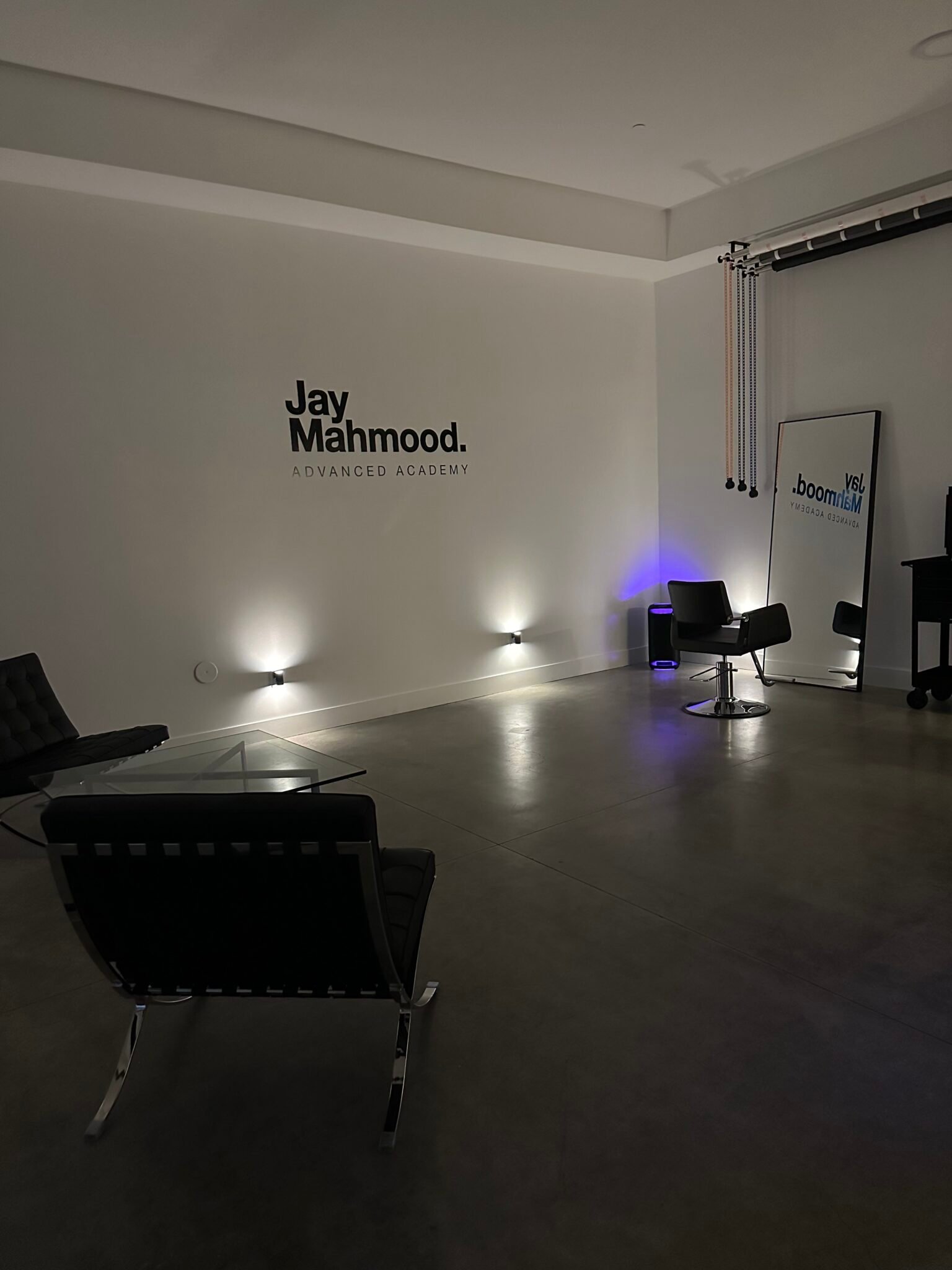
Today Jay Mahmood is based in the US. He runs the Jay Mahmood Advanced Academy in Emeryville, California, across the bay from San Francisco. The space is pared back: white walls, polished concrete, a single styling chair, a full-length mirror. Nothing competes with the haircut.
One line on the academy’s website sums up the approach in four words: “Discipline first. Creativity second.” It is easy to misread that as a dismissal of creativity. In practice, it reads more like a sequence. The academy says it is guided by standards rather than trends. Mahmood founded it, the academy explains, to restore depth and clarity to modern haircutting.
The courses show what that means. Essential Shapes, the three-day foundation class, is billed as the strict foundations of precision cutting. Each day pairs a demonstration with hands-on work, morning and afternoon, for six of each. No more than 10 students share the room. The Contemporary Shapes classes then introduce salon-friendly disconnection and teach stylists to work with density, texture and growth patterns. The men’s curriculum follows the same two-step logic.
There is a lesson here that reaches well beyond hairdressing. Musicians practice scales and designers learn grids for the same reason. Structure is not the opposite of freedom; it is what makes freedom repeatable. A stylist who understands why a line falls where it does can break that line on purpose. Just as important, that stylist can fix it when it goes wrong.
Jay Mahmood’s Precision Cutting Lessons
Mahmood’s public teaching is unusually specific. Much of it is useful whether you hold scissors for a living or not.
Question what you were taught. In a recent post about cutting a bob, he looked back at a method from his own training. The head is kept pushed down, then lifted up and slightly away when working into the sides. He argues that this limits head movement. In his view, that limitation sits behind some of the most common bob mistakes, such as a line that rounds off behind the ears and around the face. His answer is to keep adjusting head position throughout both cutting and refining. For any professional, it is a reminder that a method you inherited is a starting point, not a verdict.
When something won’t work, check the smallest variable. More practice alone did not solve his trouble cutting a line through the comb. Changing how he held the tool did. Small mechanical habits often decide big outcomes.
Know where one technique becomes another. He has demonstrated how he moves from graduation into a line when cutting a classic graduated bob. Studying that handover, rather than either technique in isolation, is a worthwhile exercise for any stylist refining a bob.
Start with precision, then tailor. Mahmood has described his process as beginning with a technically precise haircut. Then he adjusts for the person: texture, facial features and personal style. Suitability, he has said, comes first.
Design for real life. He has also pointed out that clients rarely wear their hair the way it was styled straight out of the chair. For that reason, he builds versatility into the shape. He believes in “hair being cut well, but still having the freedom and ability to move.” Ultimately, he wants the wearer to leave with a sense of confidence and poise.
Cut men’s hair to measure. His approach to men’s work borrows from tailoring. He calls it bespoke: a cut fitted to one client rather than a template applied to many.
Teaching the Teachers
If precision is Mahmood’s craft, education is his real subject. His three-day Teacher Training Program is aimed at stylists who want to become educators. In recent posts, he has celebrated graduates who went on to rebuild their own education businesses, from new names to new pricing.
He has long paid attention to how other people teach, too. In 2017 he gave a masterclass at Cardiff and Vale College in Wales. Afterward, he said the college’s teachers were “more like life mentors and life coaches” than skill instructors. That distinction runs through his own stated mission. He has said he wants to give back, especially to younger stylists, and to leave the industry in a better position than he found it.
More recently, Jay Mahmood became a Pro Artistic Partner for Shu Uemura and Kérastase, and he has taught at the L’Oréal Academy in New York. His home base, though, remains the academy in Emeryville.
Beyond the Chair
Some of the most human glimpses of Jay Mahmood come from the people he has trained. In October 2026, the barber Eshawn, host of the Uncle Eshawn podcast, recorded an episode titled “Beyond the Chair” with the man he calls his teacher. Eshawn says Mahmood’s three-day precision class pushed him to slow down, become a student again and approach each haircut more deliberately.
Their conversation travels from Mahmood’s London upbringing and his start at Sassoon to how he discovered his gift for teaching. It also covers why he chose a career outside the traditional salon. Rather than build a book of clients, he built a business around his expertise. Further from the salon, the two talk about family, discipline, reinvention and the challenge of balancing ambition with being present.
For readers in any creative field, that may be the most transferable idea of all. Mahmood did not build his reputation by guarding what he knows. He built it by organizing that knowledge so clearly that other people could learn it, teach it and carry it further.
His own advice to young stylists has never been complicated. Study hard, stay dedicated and expect ups and downs along the way. Above all, he says, “think progress, not perfection.” The trainee who could not cut a line through his comb would probably agree.