

Adam Federico and the Gap Between a License and an Education
At 1515 Sports Drive in north Sacramento, two educational projects share an address and a surname. One is Federico Beauty Institute, an accredited beauty school that reported 448 students in its certificate programs in 2023. The other is Federico Advanced, a smaller brand at the same address that has hosted post-license classes and sells cutting tools. It has also become closely tied to one member of the family: Adam Federico.
To understand either, start with a sentence the family has repeated for generations. According to the school’s published history, founder James Federico built it around one conviction: “a license doesn’t earn a living, but an education does.” It is a striking motto for a licensing school. It also describes the ground Adam Federico has worked on for three decades. That ground is the distance between what a hairdresser needs to pass a state exam and what they need to do the job well.
One Name, Two Schools
The Federico story begins in 1946. That year, James Federico and his brother Sam started opening beauty colleges across California’s Central Valley, from Fresno to Sacramento. After Sam died, the schools were divided. James kept the northern locations, and Sam’s widow took the southern ones, according to the Sacramento school’s account.
That split is still visible. A separate institution, Federico College, Inc., has filed its own state reports from a Fresno address. Its website has credited its 1946 founding to Samuel and Ann Federico and described the school as run by their granddaughter. In other words, the two branches tell the origin story slightly differently. Readers searching the name should not confuse the two schools.
In Sacramento, the second generation was led by Gary Federico, who retired as president in 2009. The third generation is three brothers. Jeremy, who began his career in Bay Area tech, is now the school’s president. Joseph serves as chief financial officer and compliance director. Adam is listed as creative director and board member, and a 2026 school page also calls him co-owner.
The family’s influence beyond its own campus is documented, not just claimed. In 2011, Governor Jerry Brown appointed Joseph Federico, then 30, to the California Board of Barbering and Cosmetology. That is the state body that licenses the profession. Board agendas show him serving as its president in 2016 and 2017.
The Dropout Who Came Back
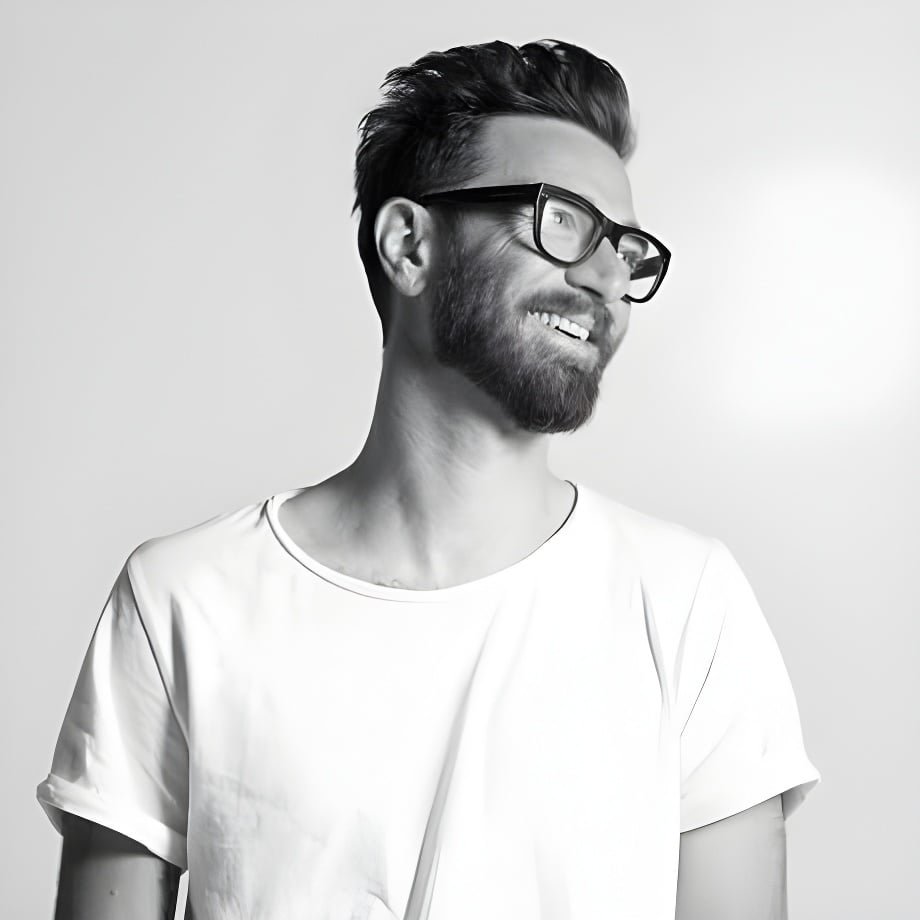
Adam Federico’s own path into hair was less inevitable than the family tree suggests. His biography for a 2017 CreativeMornings talk in Sacramento says he learned clippers with his cousins in his grandparents’ garage. He played music in high school but didn’t think of himself as creative, because he couldn’t draw. After graduating, he lasted less than a year in beauty school, a “beauty school drop out” by his own description. He then went to work at the family school, fell for the craft, and finished.
He earned his license through Federico Beauty Institute in 1996, according to the school. Afterward, he moved to Los Angeles for advanced training, including at Vidal Sassoon. He also worked in salons such as Carlton Hair International. On December 3, 1999, he opened AJF Salon, the family’s first upscale salon. One 2017 bio gives the opening year as 2000, but the school’s more specific date is used here. By 2017, he was the owner-stylist of two AJF locations.
His influences, by his own account, were not mainly hairdressers. In a 2016 Q&A published by American Salon, Adam Federico named David Bowie as his greatest inspiration. He admired the musician’s ability to keep reinventing himself. Within the industry, he singled out Gerd Hoher of Artease Colors for his integrity. He also described his collection work as built on contrast: light against dark, playful against intense. Most tellingly, he said this: “I see myself as an educator in the purest form.” He added that he could see a day when his team would work behind the chair while he guided them.
What “Advanced” Means Here
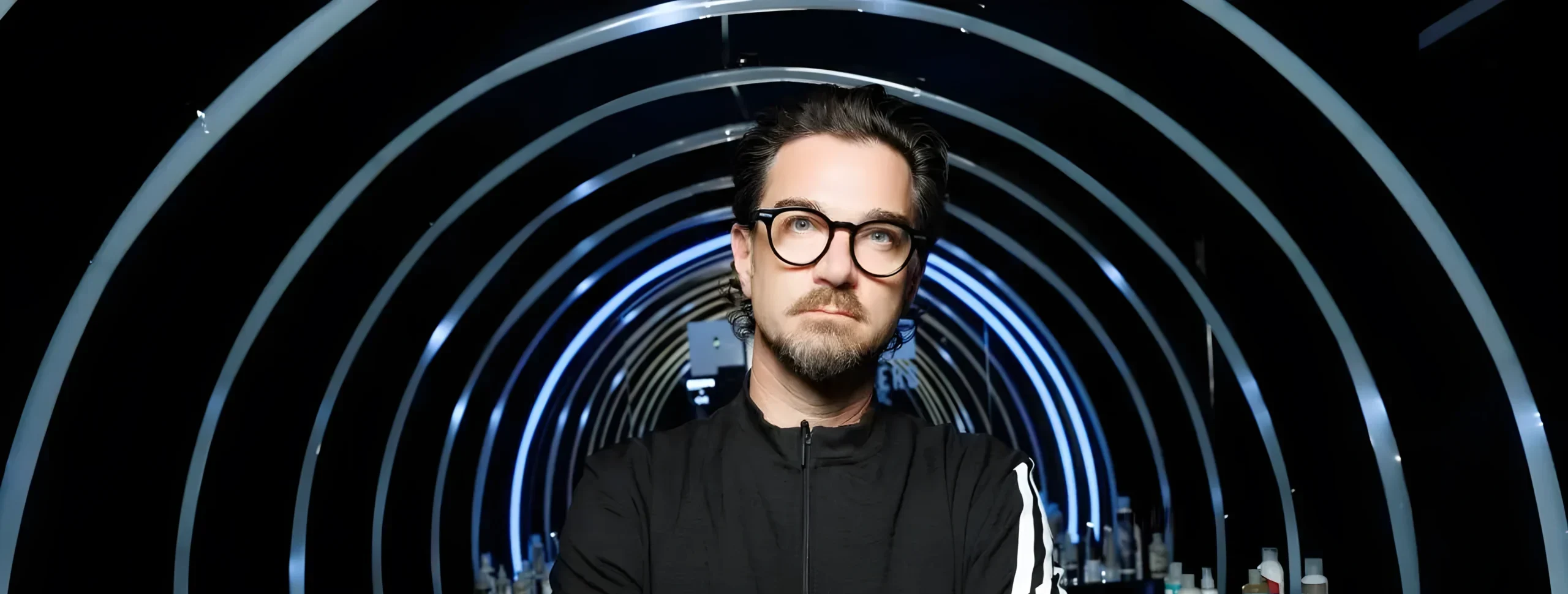
Federico Advanced is often described as an academy. The record suggests something more modest, and more interesting.
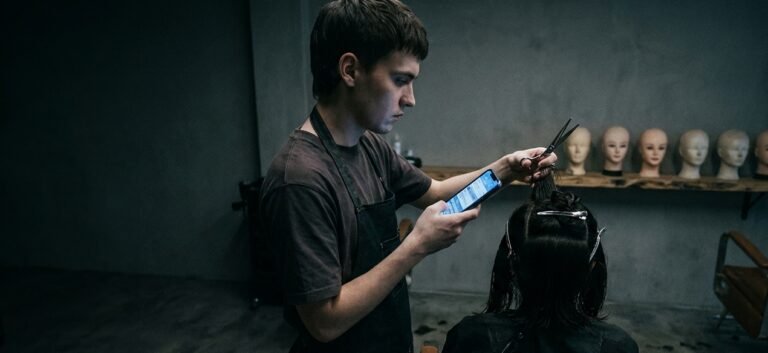
By January 2016, Adam Federico already counted Federico Advanced among his companies. That same month, a program called AJF Academy ran a razor-cutting class that the school’s blog described in detail. Adam skipped the usual morning demo and put students straight onto the Plier razor. Rather than teach set haircuts, he taught techniques such as one-length cutting, square and triangular layering, and graduation. That way, attendees could adapt them in their own salons. The write-up also notes that the first person to cut himself that morning was Adam.
Federico Advanced has operated from the family campus. Its listed address is 1515 Sports Drive, and its contact emails use the school’s federico.edu domain. Its YouTube channel describes monthly education hosted in the school’s facilities. It also brought in outside educators, including a ZGAT Academy class in June 2018 sponsored by the scissor company Bmac USA. The stated philosophy is collaboration over competition.
A Tool Shop With a Teaching Mission
Today, the emphasis has shifted. The Federico Advanced website now leads with professional tools, from cutting combs to razors and brushes, paired with guides on when to use each one. One guide opens by telling readers that most people are using the wrong comb. At the time of reporting, however, the site’s Advanced Education listing showed no scheduled classes.
That doesn’t mean the teaching has stopped, since Adam’s own education work has largely moved onto the road. Still, Federico Advanced is best understood today as a tool shop and education brand connected to the school. It is not a standalone academy with a public course calendar. Ownership is also less clear-cut than the branding implies. Adam has called it one of his companies, and trade coverage has named him its creative director. Operationally, though, it sits within the school’s campus and email systems. The public records reviewed for this story do not set out a separate ownership structure.
The License and the Education
James Federico’s maxim has gained new relevance. Since January 1, 2022, California has required 1,000 hours of training for a cosmetology license, down from 1,600. The same law, SB 803, dropped the practical exam. Supporters framed it as lowering costs and barriers to entry, while critics warned that fewer hours could thin out training.
State-required disclosures offer an independent view of the Sacramento school under the new standard. For its 1,000-hour cosmetology program, the school reported a 68% on-time completion rate for 2024. That rose to 78% within one and a half times the program length. Of graduates who sat the licensing exam, 88% passed on the first attempt, up from 69% the year before. Meanwhile, 43% of available graduates were verified as employed in the field, a figure that counts only documented jobs. The on-time program cost was $19,185, and the school’s federal loan default rate was listed at zero. State filings also record no disciplinary action by its accreditor in 2023.
Student feedback is mixed and largely anonymous. One Niche reviewer described the first cycles after the hours cut. The reviewer felt those cohorts got less support than the old 1,600-hour ones, especially in color and chemical work. “Youtube was our best friend,” the reviewer wrote, while still praising the campus and staff. Older posts on review sites complain of strict rules, and others describe demanding but supportive teachers. None of these accounts can be independently verified.
Read together, the numbers and the complaints point toward the gap in James Federico’s line. In this magazine’s reading, a 1,000-hour license is a floor. What comes after it is where most hairdressers build a career, whether that’s a razor class, a guest educator, or a brand roadshow. That is the territory Adam Federico chose. It is also the territory the “Advanced” name was meant to claim.
Taking It National With R+Co
R+Co launched in New York in April 2014. Stylists Howard McLaren, Garren, and Thom Priano founded it as a collective rather than a single-name brand. According to the family’s school, Adam Federico joined after roughly two decades at AJF, when he stepped back from day-to-day salon operations.
Adam Federico’s title at R+Co has changed several times, and sources don’t always agree. In 2021, trade coverage identified him as R+Co’s director of content. By 2023, the Hairbrained podcast introduced him as vice president of creative development. That title still appears on his Instagram and the school’s family page. In September 2026, Marie Claire identified him as R+Co’s vice president of technical education, apparently his most recent title.
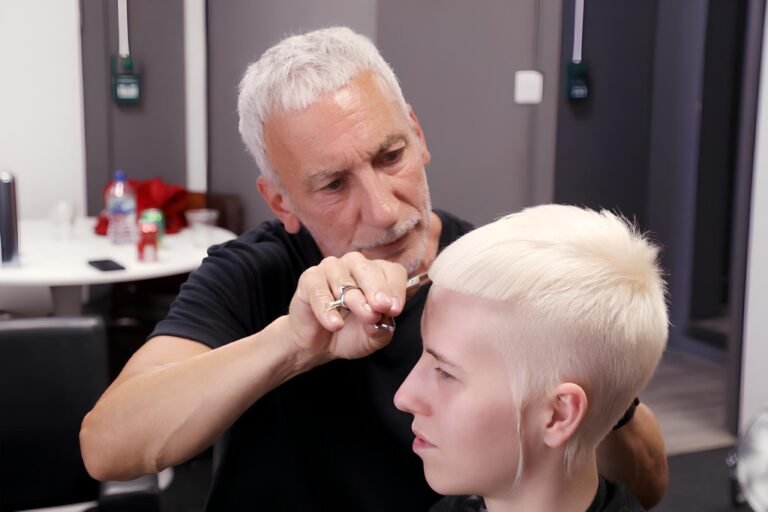
What the role looks like in practice is easier to document. In April 2025, Studio Be Salon in northern Colorado hosted him for an advanced seminar. He cut a shag-bob hybrid on a live model and finished it with R+Co products. He has also recorded on-demand cutting classes for Support Creatives, a nonprofit founded in 2020 to help beauty workers through the pandemic. That course bio adds a less expected detail: it describes him as a yoga practitioner and teacher.
How Adam Federico Thinks About a Haircut
Across a decade of interviews, a consistent philosophy emerges. For working hairdressers, it’s the most useful part of the story.
First, cut for the hair that’s actually there. The school describes his approach as a loose but disciplined way of cutting that follows the hair’s natural movement. Speaking to Marie Claire in September, he pushed the idea further. Build the shape around waves, bends, and cowlicks, he argued, instead of designing a cut that only works after a perfect blow-dry. Clients, in his view, want hair they can live in.
Second, hold the outline and loosen the inside. Describing his current take on the bob, he said he wants a strong perimeter with a disrupted interior. That interior should bring softness, separation, and movement. For him, the tension between precision and imperfection is what keeps the shape current. His summary: “The strongest hair right now feels designed, but not over-designed.”
Third, build versatility into the cut. In 2021, he described a short shape with longer, disconnected lengths through the top, which he nicknamed the Shift. It could be finished raw or polished. The goal was a haircut that meets a client “for who they are within that day.”
Fourth, borrow attitude, not costume. He has said he draws on the spirit of late-’70s and early-’80s shags without recreating a period haircut. The result, he argues, should still belong to the person wearing it.
None of these ideas is his alone. Each reflects a broader shift toward texture-led, individual cutting. What sets his version apart is how consistently he ties it to teaching. As in that 2016 razor class, he tends to teach principles rather than finished haircuts, so students can adapt instead of copy.
Evolve or Dissolve
Adam Federico’s personal motto, “evolve or dissolve,” appears in nearly every bio he has. It’s easy to read as a slogan, but the record gives it some weight. A beauty school dropout became a Sassoon-trained salon owner. That salon owner became an educator who, in 2016, pictured his team behind the chair while he coached. A decade later, he travels for a national brand. Meanwhile, the family school marks 80 years under a shorter licensing standard.
The open question is what Federico Advanced becomes next. Its class calendar is currently empty; its shelves are not. At the top of its education page sits the brand’s current slogan, just two words long: “Forward Only.”