

Korean Hair Aesthetics: Why the Look Travels Faster Than the Skill
In Cheongdam-dong this spring, a hair academy graduated its twenty-first class. Twelve students. The next intake, which opened in June, also caps at twelve.
That number is the most useful fact in any discussion of Korean hair aesthetics. JUNO Academy’s Designer Training Program runs 180 days, five days a week, on live models, with graduates assessed against the same standard applied to working designers serving paying clients. It accepts applicants of any nationality, any age, experienced or not. Top graduates are placed in JUNO Hair salons.
Now set twelve against the other number. Before most salons outside Asia had a name for it, the hush cut had already passed 70 million views on TikTok.
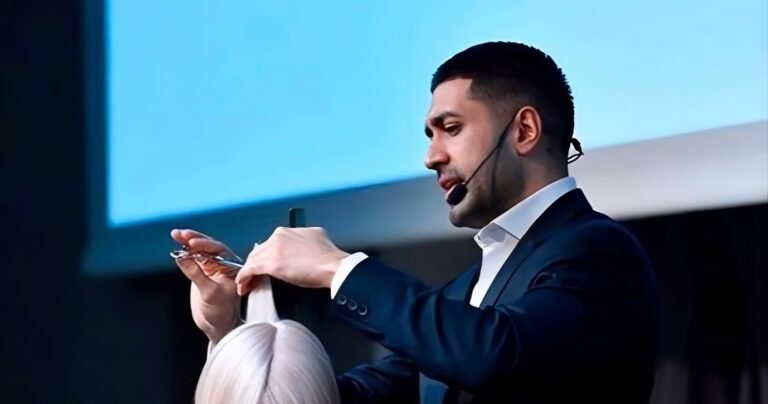
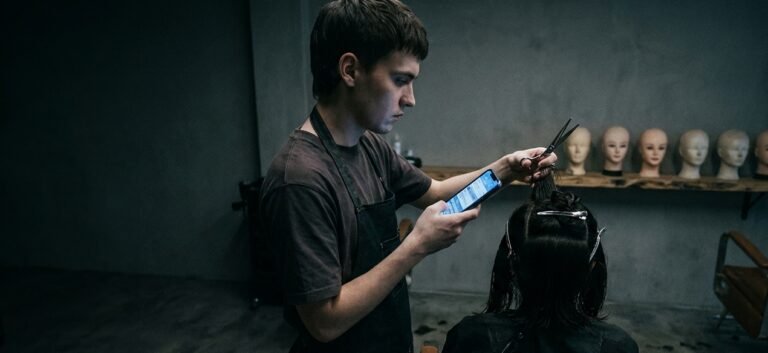
The picture moves instantly and costs nothing. The hands move twelve at a time, in Seoul, over six months. Nearly everything worth understanding about this trend lives in that gap.
The K-pop explanation doesn’t survive the trade data
The standard account says Korean hair spread because Korean pop culture spread. It’s tidy, and the export figures complicate it badly.
Korea’s Ministry of Food and Drug Safety put 2025 cosmetics exports at a record $11.43 billion, making Korea the world’s second-largest cosmetics exporter after France. Skincare accounted for $8.53 billion of that, or 74.7 percent. Color cosmetics took $1.51 billion. Hair products came to $590 million — a little over five percent. Korea Customs Service, using a narrower category, logs $478 million, up 15.7 percent on the year.
Growing fast, yes. Dominant, no. If Hallyu were a delivery system for beauty generally, hair would not sit at a twentieth of the freight. The reason is unglamorous: a serum ships. A cut does not.
What the influencer research actually found
There’s also a direct test of celebrity primacy, and it points the same way.
A 2021 experiment in Fashion and Textiles put 800 Chinese millennial women through a controlled design using a fictitious Korean brand, comparing an A-list Korean actress against an ordinary beauty influencer with comparable reach. The everyday influencer produced significantly higher acceptance of the new product than the celebrity did.
Read that carefully, though. The interaction effects flipped it: when sponsorship went undisclosed, the celebrity won. It’s one product, one star, one market. What the study rules out is not celebrity influence but celebrity primacy — the assumption that the famous face is doing the causal work.
Research inside Korea nudges further in the same direction. Interviewing thirteen Seoul men aged 36 to 56, Joanna Elfving-Hwang found that rather than being motivated by a desire to emulate male celebrities of similar age, men in this age group engage with body work primarily for the homosocial gaze of other men in their workplace. Small sample, one city, one age band. Still, grooming there reads as workplace positioning, not fandom.
A century of hair as public property
The aesthetic has a longer history than any idol group, and it is unusually political.
Under the 1895 short-hair edict, Confucian teaching held that cutting hair was unfilial, and severing a married man’s topknot was likened to castration. The scholar Choe Ik-hyeon answered: “You may cut off my head, but you cannot cut off my hair.” A Japanese barber removed King Gojong’s topknot in December 1895, because no Korean could be found who would do it. The order collapsed in about a fortnight, after merchants and porters refused to enter Seoul and the price of wood and rice soared.
It kept happening. The 1973 Minor Offenses Act capped men’s hair length and women’s skirt length; police took long-haired men into stations and cut their hair on the spot. Roughly 12,000 men were detained under it in 1973 alone. School rules were relaxed in 1982, though individual schools kept their own restrictions. As recently as 2018, Seoul’s education authority was still pushing the argument, noting that 84 percent of the city’s secondary schools had by then freed up hair length.
For most of the modern era, a Korean citizen’s hairstyle was something the state had opinions about. Personal styling as an ordinary freedom is, in Korea, roughly one working lifetime old.
The profession begins with one apprenticeship
The commercial trade starts in the same period, and its origin story is a transmission story.
According to the Academy of Korean Studies’ Encyclopedia of Korean Culture, Oh Yeop-ju trained as the only Korean student at a Japanese-run women’s beauty school in colonial Gyeongseong. On March 16, 1933, she opened Hwasin Miyongwon on the second floor of the Hwasin store in Jongno — the first salon opened by a Korean woman. After liberation she turned to training the next generation, working to establish hairdressing as a modern profession.
Vogue Korea follows that thread forward: from Oh’s 1933 salon to Ha Jong-sun, who produced more than a hundred Miss Koreas, on to the Cheongdam stylists and eventually the global K-pop trendsetters. Korea now has roughly 113,000 salons in a country of about 52 million.
Every link in that chain is a person teaching another person by hand. No shortcut appears anywhere in it.
Why the technique is hard to lift
There is a physical reason the Korean service menu looks the way it does, and it needs stating carefully.
Averaged across populations, East Asian hair is more circular in cross-section and larger in diameter than other hair types, with Caucasian hair falling in between, and a 2020 review in Clinical, Cosmetic and Investigational Dermatology reports that Asian hair shows the highest hardness and elastic modulus. These are population averages with heavy overlap. Researchers now warn explicitly that classifying hair by race is not representative, since different groups share the same hair forms. Treat it as a distribution, never as a rule about a client in your chair.
A thicker, rounder, stiffer average fiber resists curl and holds shape stubbornly. That is the problem Korean and Japanese salons spent decades engineering around, and it produced the hot-perm family: C-curls, root lift, setting perms, thermal straightening.
Here the popular label misleads. “Digital perm” is trademarked by the Japanese company Paimore; stylists generally call it a hot perm, and it is used across both Japan and South Korea. The signature technology behind “Korean perms” is Japanese in origin, adopted and scaled in Korea. A US patent filing describes the process plainly: up to five hours, demanding a high level of winding skill from the stylist, with over-processing risk if the reducing agent sits too long or the heat runs wrong.
That sentence is the whole supply problem. The service is skill-gated by design.
The curriculum problem, and its mirror
Western cosmetology training is built around whatever the licensing exam asks for. The textured-hair reckoning showed exactly how that works: schools aim to train students for the state board, which asked nothing about natural textured hair, and Milady’s standard textbook was only revised in 2020, with Louisiana becoming the first state in 2021 to test textured cutting.
That fight is its own issue, tied to race and access, and it shouldn’t be collapsed into this one. What carries over is the mechanism. A curriculum optimized for one default fiber leaves everything else to post-graduate training that most stylists pay for themselves.
The mirror image exists too. Korean salon guides written for visitors advise that many Korean salons aren’t accustomed to curly hair, and that some now designate specific stylists who can handle it. Every training system is excellent at the texture it sees daily and improvising on the rest.
So what actually crossed the border
Strip out the assumptions and three channels remain, none of them a stadium tour.
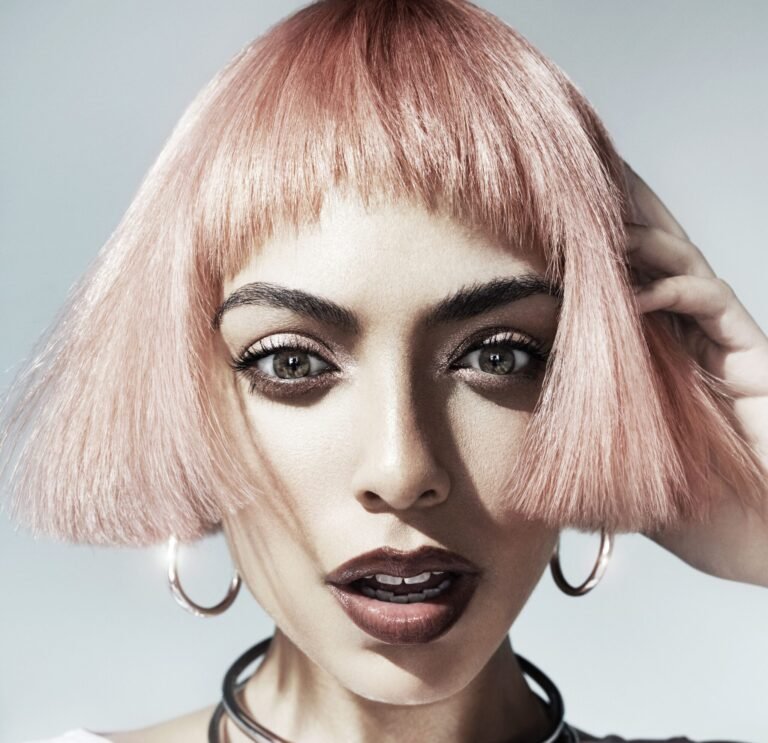
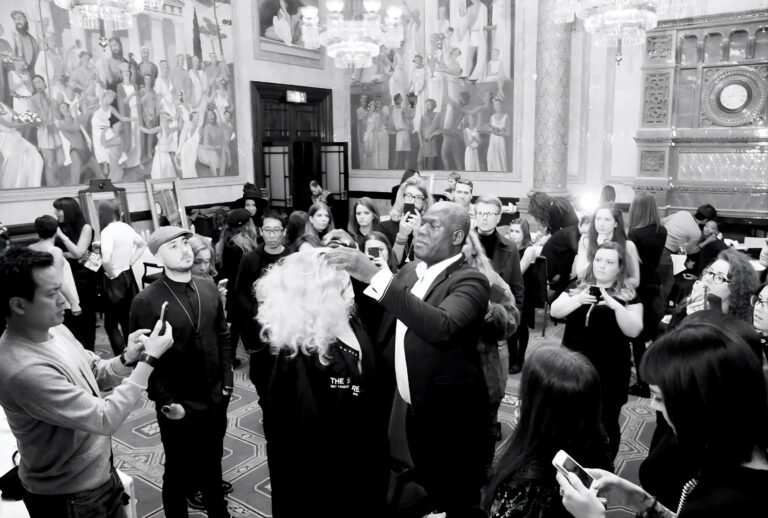
Tutorial culture moved the reference — the vocabulary of see-through fringes, soft face-framing layers and low-saturation tone that lets a client name what she wants. Diaspora salons moved the service, which is why Koreatown price lists in Los Angeles and New York read like Gangnam ones. Academies moved the craft, slowly, in person, twelve at a time.
That third channel is the only one that produces a stylist who can execute. It is also the one nobody is counting.
Is it durable?
Prediction here has a poor record. In a 2012 government-linked survey, more than 60 percent of respondents expected the Korean Wave to fade within four years. It did the opposite.
Current numbers look healthy, with caveats. The 2026 Overseas Hallyu Survey polled 27,400 people across 30 regions who had encountered Korean content, and 69.7 percent viewed it favorably. But that samples the already-converted, so it measures enthusiasm, not reach. Meanwhile China banned Korean content in 2017 over the THAAD deployment, and anti-Hallyu sentiment has grown in Japan and parts of South and Southeast Asia, while Korean researchers now warn that oversaturation and over-commercialization are fueling fatigue and backlash in key markets.
For a salon owner, the forecast barely matters. Soft layering, precise weight removal, controlled thermal texture and low-saturation toning outlive whatever the cut gets called next season. The label is a trend. The competence is an asset.
Which is the practical case for treating this as a training question rather than a menu item. A reference photo takes a client four seconds to find. The stylist who can read her fiber diameter, place the weight for her face, and bring a hot perm off without cooking the mid-lengths took somebody six months and a lot of live models.
Sources & Further Reading
This article was independently researched using academic studies, institutional data, historical sources and industry research. Selected sources and further reading are provided below.
Elfving-Hwang (2021), Men and Masculinities
https://journals.sagepub.com/doi/abs/10.1177/1097184X20976730Holliday & Elfving-Hwang (2012), Body & Society
https://journals.sagepub.com/doi/abs/10.1177/1357034×12440828Wang & Lee (2021), Fashion and Textiles
https://pmc.ncbi.nlm.nih.gov/articles/PMC8019591/Leerunyakul & Suchonwanit (2020), Clinical, Cosmetic and Investigational Dermatology
https://www.dovepress.com/asian-hair-a-review-of-structures-properties-and-distinctive-disorders-peer-reviewed-fulltext-article-CCIDKorea Herald, K-beauty exports 2025
https://www.koreaherald.com/article/10652928Encyclopedia of Korean Culture, Oh Yeop-ju
https://encykorea.aks.ac.kr/Article/E0081232